
A few years ago I read about Resurrection Eggs on my friend's blog. When I realized that I was teaching YWs on Easter, I decided that I would use this as my object lesson. You can buy these kits already made, but they don't seem to cover all the events leading up to the Resurrection and I wanted to share the full story, so I made a few changes of my own.
I started by reading about the Savior's last week here on LDS.org. I wanted to cover all these main events. I also found a lot of great info on the seminary manual for New Testament.

When Jesus was having a meal with friends, Mary poured expensive ointment on his head. Some complained about the expense, but Jesus said, “Why trouble ye this woman? For she hath wrought a good work upon me. “For ye have the poor always with you; but me ye have not always. “For in that she hath poured this ointment on my body, she did it for my burial” (Matthew 26:10–12).
Explain that Mary’s act of anointing the Savior’s head and feet with spikenard (a costly ointment) was an act of such reverence that even kings rarely received it (see James E. Talmage, Jesus the Christ, 3rd ed. [1916], 512).
According to Mark 14:5, how much was the ointment worth? (Explain that three hundred pence was about equal to the amount a common laborer could earn in a year.)
How did the Savior respond to Judas’s criticism of Mary?
Point out the phrase “she hath wrought a good work on me” in verse 6, and explain that it indicates that the Savior was pleased with what Mary had done. Also point out the phrase “she hath done what she could” in verse 8, and explain that this implies that Mary had given her best to the Lord.
What truth can we learn from these verses about how the Savior feels when we give our best to Him? (Students may use different words but should identify the following principle: The Savior is pleased when we give Him our best.)
#2: PALM LEAF - Triumphal Entry (John 12:12–15)

Jesus left Bethany five days before the Passover and traveled to Jerusalem. “On the next day much people that were come to the feast, when they heard that Jesus was coming to Jerusalem, “Took branches of palm trees, and went forth to meet him, and cried, Hosanna: Blessed is the King of Israel that cometh in the name of the Lord” (John 12:12–13).
What can you do to honor Christ? How can you share your testimony of Him with others?
#3: BAND-AID - Healing and Teaching at the Temple (Matthew 21:12–14, 23; Mark 11:17, 27; Luke 19:46–48;John 12:42–50)

Just as He had seen three years earlier, Jesus saw within the holy enclosure of the temple the crude and disgraceful buying and selling of goods. “And Jesus went into the temple of God, and cast out all them that sold and bought in the temple, and overthrew the tables of the moneychangers, and the seats of them that sold doves, …“And the blind and the lame came to him in the temple; and he healed them” (Matthew 21:12, 14).
We, too, can enter the temple when we are clean and pure. We can be healed by the Spirit of God found inside the temple. Consider making a commitment and scheduling dates to help you attend as often as your circumstances allow.
#4: SACRAMENT CUP AND CRACKER - Last Supper (Luke 22:19–20)
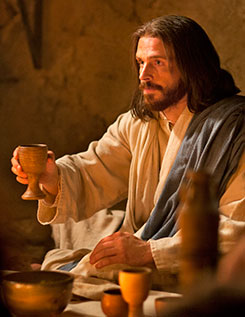
During the Passover meal that Jesus spent with His disciples, the Savior instituted the sacrament, which is in remembrance of His sacrifice for us.
“And he took bread, and gave thanks, and brake it, and gave unto them, saying, This is my body which is given for you: this do in remembrance of me. “Likewise also the cup after supper, saying, This cup is the new testament in my blood, which is shed for you” (Luke 22:19–20).
How do you remember the Savior when you partake of the sacrament? Watch a short video on this topic at lds.org/go/sacrament4NE.
#5: FLOWERS - Garden of Gethsemane (Luke 22:41–44)

Jesus went into the Garden of Gethsemane “and kneeled down, and prayed, “Saying, Father, if thou be willing, remove this cup from me: nevertheless not my will, but thine, be done. “And there appeared an angel unto him from heaven, strengthening him. “And being in an agony he prayed more earnestly: and his sweat was as it were great drops of blood falling down to the ground” (Luke 22:41–44).
“For behold, I, God, have suffered these things for all, that they might not suffer if they would repent; “But if they would not repent they must suffer even as I; “Which suffering caused myself, even God, the greatest of all, to tremble because of pain, and to bleed at every pore, and to suffer both body and spirit—and would that I might not drink the bitter cup, and shrink— “Nevertheless, glory be to the Father, and I partook and finished my preparations unto the children of men.” Doctrine and Covenants 19:16–19.
As you go through your trials in life, you can be assured that the Savior understands and will help you as you lean on Him. Are there struggles in your life, including things that you need to repent of, that you can give to the Lord so He can help ease your burden (see Matthew 11:28–30)?
#6: SILVER COINS - Betrayal (Matthew 26:14-16, 47-49)
Judas sold Christ for the price of a slave - 30 pieces of silver
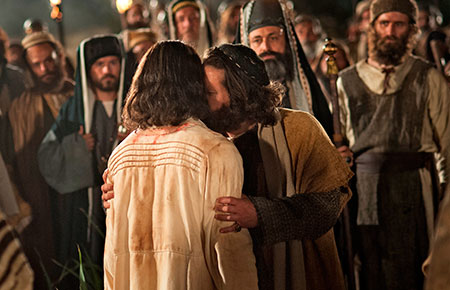
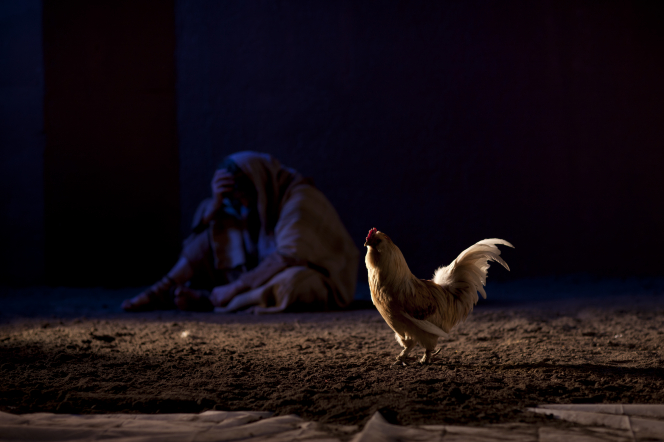
#7: CHICKEN FEATHERS - Denied, Alone (Matthew 26:34-35, 74-75)
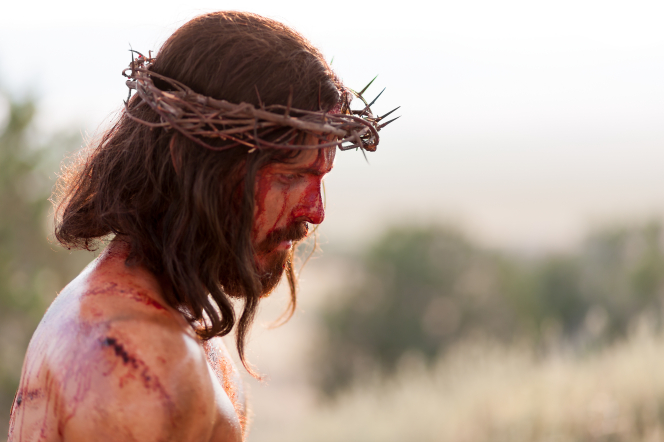
Jesus bore with patience the abuse that came during and after His trial.
“And the soldiers plaited a crown of thorns, and put it on his head, and they put on him a purple robe, “And said, Hail, King of the Jews! And they smote him with their hands” (John 19:2–3).
How can Jesus’s example of love and compassion in the midst of betrayal, trial, and mistreatment help you through hard times of your own?
#9: CROSS - Crucifixion (Matthew 27:33–50)

Jesus Christ willingly died on the cross as a ransom for us all. He taught His disciples: “Therefore doth my Father love me, because I lay down my life, that I might take it again.
“No man taketh it from me, but I lay it down of myself. I have power to lay it down, and I have power to take it again. This commandment have I received of my Father” (John 10:17–18).
We owe so much to the Savior for His love and sacrifice for us. How can we express our gratitude to Him? Consider the words of this song and how you can apply them to your life: “Have faith, have hope, live like His Son, help others on their way” (“He Sent His Son,” Friend, Jan. 2014, 30–31).
*Why don't Mormons wear the cross?
https://www.lds.org/ensign/2005/04/the-symbol-of-our-faith?lang=eng
Following the renovation of the Mesa Arizona Temple some years ago, clergy of other religions were invited to tour it on the first day of the open house period. Hundreds responded. In speaking to them, I said we would be pleased to answer any queries they might have. Among these was one from a Protestant minister.
Said he: “I’ve been all through this building, this temple which carries on its face the name of Jesus Christ, but nowhere have I seen any representation of the cross, the symbol of Christianity. I have noted your buildings elsewhere and likewise find an absence of the cross. Why is this when you say you believe in Jesus Christ?”
I responded: “I do not wish to give offense to any of my Christian colleagues who use the cross on the steeples of their cathedrals and at the altars of their chapels, who wear it on their vestments, and imprint it on their books and other literature. But for us, the cross is the symbol of the dying Christ, while our message is a declaration of the Living Christ.”
He then asked: “If you do not use the cross, what is the symbol of your religion?”
I replied that the lives of our people must become the most meaningful expression of our faith and, in fact, therefore, the symbol of our worship.
#10: ROCKS - Earthquakes (Matthew 27:51-53)
The Temple veil was broken from the earthquakes
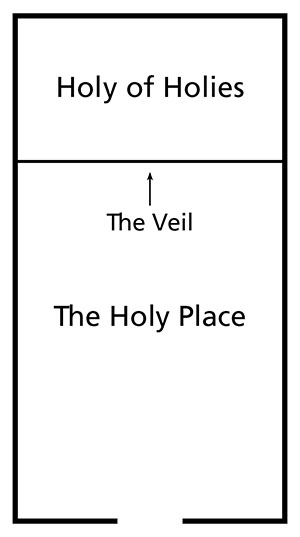
Explain that during the time of Jesus, the temple had two rooms: the Holy Place and the Holy of Holies. The Holy of Holies represented the presence of God. These two rooms were separated by a veil, or curtain. Once a year, on the Day of Atonement, the high priest passed from the Holy Place through the veil of the temple and entered into the Holy of Holies, where he sprinkled the blood of a sin offering to atone for the sins of all the congregation of Israel (see Leviticus 16). When the veil of the temple was torn in two at the death of Jesus Christ, it was a dramatic symbol that Jesus Christ, the Great High Priest, had passed through the veil of death and would shortly enter into the presence of God the Father.
To help students better understand the significance of the tearing of the veil, invite a student to read aloud the following statement by Elder Bruce R. McConkie of the Quorum of the Twelve Apostles:
“The Holy of Holies is now open to all, and all, through the atoning blood of the Lamb, can now enter into the highest and holiest of all places, that kingdom where eternal life is found. … The ordinances performed through the veil of the ancient temple were in similitude of what Christ was to do, which he now having done, all men become eligible to pass through the veil into the presence of the Lord to inherit full exaltation” (Doctrinal New Testament Commentary, 3 vols. [1965–73], 1:830).
What important truth can we learn about the Atonement of Jesus Christ from the tearing of the veil? (After students respond, write the following truth on the board: Because of the Atonement of Jesus Christ, we can all enter the presence of God if we repent and keep our covenants.)
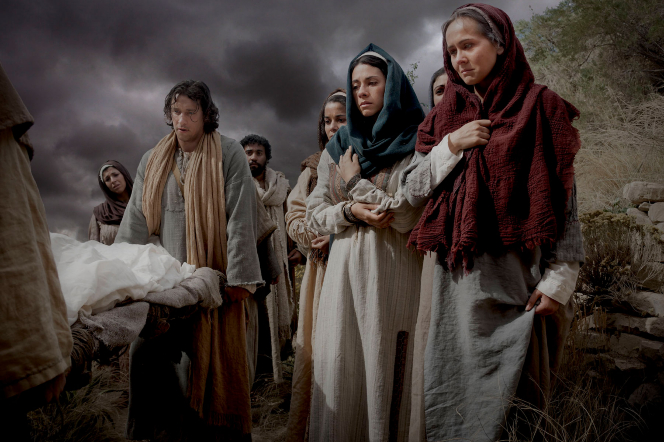
#11: WHITE CLOTH - Burial (Matthew 27:57-61)
#12: EMPTY EGG - Resurrection (Matthew 28; Mark 16; Luke 24; John 20)
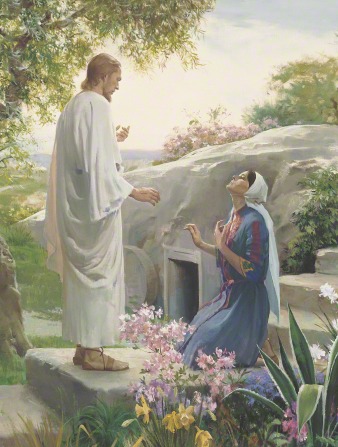


After Christ was resurrected, He appeared to Mary Magdalene. “Jesus saith unto her, Touch me not; for I am not yet ascended to my Father: but go to my brethren, and say unto them, I ascend unto my Father, and your Father; and to my God, and your God” (John 20:17).
Because of Jesus Christ’s Resurrection, we can say, along with the Apostle Paul: “O death, where is thy sting? O grave, where is thy victory?” (1 Corinthians 15:55).
Consider how your knowledge of the Resurrection helps you when someone you love dies.
#Halleluja!
I am so grateful for our knowledge of the Resurrection and the Plan of Salvation. I'm grateful for our Savior and His sacrifice for each of us. I am thankful that through His mercy we have the opportunity to live with our Father in Heaven again someday.

2 comments:
This is really great. How was the lesson received?
Looks like a wonderful lesson!
Post a Comment